

Sheets, T-shirts, underwear, and socks are made of cotton, but where does it come from? Cotton is a natural plant fiber—it is obtained from the fluff that grows around the seed of the cotton plant. Globally, no less than 18 million tons of cotton fiber are produced each year. But only 0.7% of this cotton is organic. 99.3% is conventional cotton, grown using herbicides and pesticides. Ranking among the top crops in the world after rice, corn, tomatoes, and wheat, the cotton we use every day is produced mainly in China and India. In regions with intensive cotton plantations, the environmental impact is significant. Of course, it’s not enough to simply claim that organic cotton is better. In this short article, we want to explore why, by examining the concrete differences between the two types. What does it mean to sleep wrapped in organic cotton sheets? How do they differ from conventionally produced cotton sheets?
Conventional cotton farming methods
Let’s not kid ourselves: conventional cotton farming isn’t very environmentally friendly. This crop covers about 2.4% of the world’s total cultivated land, but accounts for 6% of global pesticide use and 16% of global insecticide use. When it comes to the safety of some of these active ingredients—some of which are classified as particularly hazardous by the WHO itself—there is often insufficient certainty.
Cotton is harvested using large combine harvesters. The world’s leading producers are India, followed by China and the United States. The use of industrial farming techniques eventually depletes the soil. But its use in the textile industry represents a thriving market worth $37 billion a year. These figures give an idea of the significant impact cotton can have on the planet, not to mention its economic and social role.
In addition, it’s important to know that conventional cotton is also very water-intensive: 5,260 liters* are needed to produce one kilogram of cotton (*source: CNRS). To give you an idea, a pair of cotton jeans costing a few dozen euros requires an average of 7,500 liters of water—that is, 50 full bathtubs—to produce.
Heavy metals such as lead or chromium are often used to dye cotton. Returning to those pants that many of us wear, it’s worth noting that 1 kg of pigment used to dye a pair of jeans requires a significant amount of oil, solvents, and 1,000 liters of water. A mixture of toxic chemicals is required to bleach, dye, and finish a pair of jeans. Furthermore, there is also the issue of the complete outsourcing of production stages. Within the dynamics of the low-cost fashion market, jeans often travel tens of thousands of kilometers around the world to be dyed, washed, and aged in different production areas thousands of kilometers apart from one another, before reaching store shelves.
Overall, the film reveals the environmental damage caused to rivers, lakes, seas, and entire ecosystems, as depicted in the documentary *The RiverBlue: Can Fashion Save the Planet?* by Roger Williams and David McIlvride. Filmed in China, Bangladesh, and India, it shows how, across the Asian continent, 70% of rivers and lakes are contaminated by the 11.3 billion liters of wastewater produced by the textile industry, through production processes that are largely unregulated. As a result, people living near these water bodies—who rely on them for their water supply—suffer from a high incidence of cancer, as well as gastrointestinal and skin problems.
Organic cotton farming techniques
In light of this observation, a greener form of agriculture with a lower environmental impact has emerged with the advent of organic cotton. But how does organic farming offer a solution for more environmentally friendly production? What are the economic and environmental implications of organic cotton? Here are some of the differences between conventional and organic cotton farming.
Farming the land in a more sustainable way means integrating into an ecosystem in a thoughtful manner. While industrial agriculture makes intensive use of water resources—leading to the depletion of aquifers—organic farming uses relatively little water. It is based on enriching the soil and increasing its ability to retain rainwater.
On the one hand, monocultures, aggressive herbicides, and pesticides often used without oversight, pushing the limits of what is legally permitted. On the other hand, crop rotation, natural fertilization, and respect for and utilization of biodiversity.
Returning to the cotton supply chain, as the process moves from the field to the factory, the industrial sector begins to use chemicals that are toxic to human health to facilitate the various stages of yarn and fabric processing. Chlorine, chromium, and other heavy metals are used in industrial cotton processing, particularly during the bleaching, dyeing, and printing stages. In contrast, in the organic sector, the use of toxic substances is prohibited. Instead, chemical peroxides and water-based pigments are used.
The facts speak for themselves: organic cotton farming reduces the impact on climate change by 46%. Over its entire production cycle, an item made from organic cotton requires 62% less energy to produce than the same item made from conventional cotton.
The organic textile sector is growing rapidly—with new companies obtaining GOTS certification at a rate of 10% per year.
Impact on water: Use water resources wisely
1 T-shirt = 70 showers, 1 pair of jeans = 50 baths: when you consider that India and China, the leading cotton producers, are also two countries with serious freshwater access issues, the situation becomes alarming.
Various figures have been cited to compare the differences in water consumption between conventional and organic cotton. However, it is not easy to provide an exact figure for the savings achieved: it depends on the method of comparison and the type of crops being compared (irrigated or non-irrigated). The most frequently cited reference is the 2014 Textile Exchange report, *The Life Cycle of Organic Cotton Fiber*. That report highlights the trends in annual cotton production in India, China, the United States, Turkey, and Tanzania. The report shows that organic cotton cultivation uses 91% less water than conventional cotton cultivation methods.
You have to know how to interpret this data—as Mars-Elle points out in its article, there are some inaccuracies. From one country to another, and from one geographical area to another, for example, soil penetration rates and precipitation levels can vary greatly. And the data on irrigation rates for these same areas are not specified with precision. Especially when we know that, in reality, rainwater is rarely sufficient to irrigate fields and that water must be diverted from rivers, lakes, and aquifers.
On the other hand, there is the 2016 report by WWF and C&A, which assesses the total water consumption for growing conventional and organic cotton on various farms across different regions of India (2013 and 2014 harvests). The result? The water footprint is 25 times higher for conventional cotton cultivation than for organic cotton.
What's the problem?
Although this study is more accurate than the previous one, the areas studied require little or no irrigation, which is hardly representative of conventional cotton fields.
Generally speaking, however, based on these two studies, it can be said that organic cotton farming is less water-intensive than conventional cotton farming. However, be sure to cite your sources, read the reports carefully, and take into account the methods used
No, organic cotton isn't always as white as a sheet
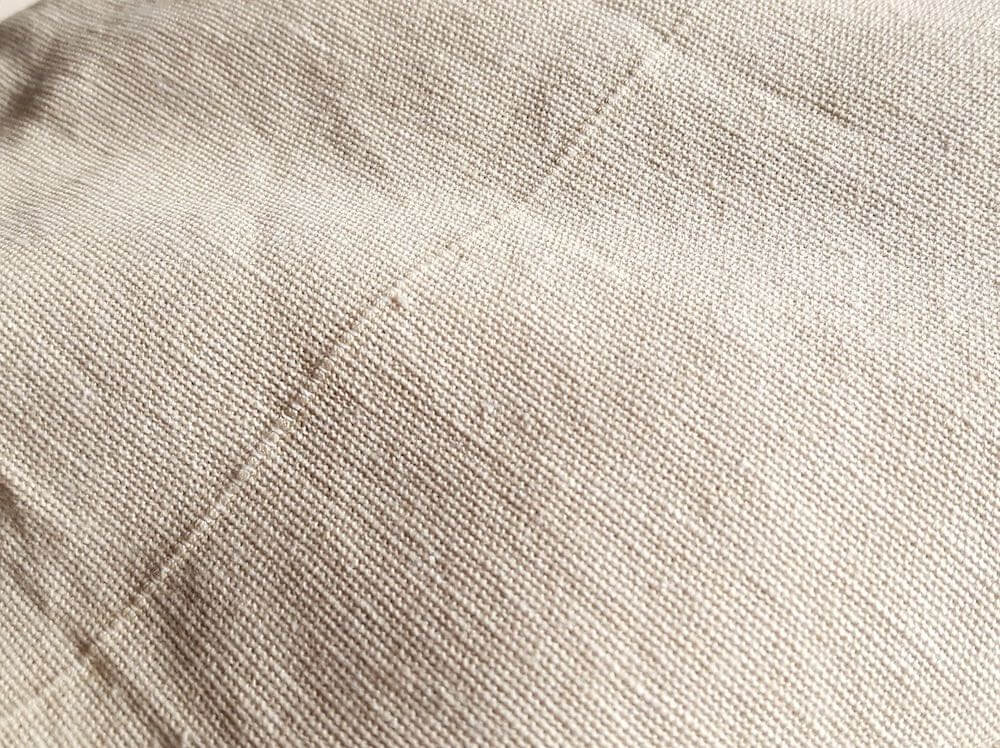
By producing and consuming differently, we discover many wonderful things. In particular, the cotton we imagine as pure white is only white because it is often bleached and dyed. In reality, in its natural state, cotton is quite rough and comes in various shades, ranging from beige to gray.
Now let’s take a closer look at the life cycle of cotton before it ends up in your mattress or Kipli pillow cover.
When it blooms, the fruit capsules burst open. A white pearl emerges. This is when the cotton is harvested and pressed into a large bale using a special press, before the cotton fiber is separated from the seed pods. However, in unbleached fabrics, the seed pods remain visible as small spots of a different color. No problem—these are simply natural variations in the cotton’s color.
After all, that’s what makes our mattresses and pillows so charming, isn’t it? If you happen to notice these little spots, feel free to send us a photo of your pillow at hello@kipli.com, and we’ll be able to confirm whether they’re truly just nature’s little quirks.
How can I tell if my bedding is really made from organic cotton?
GOTS and OCS: What Do These Organic Cotton Labels Mean?
The Global Organic Textile Standard (GOTS) is the world’s leading processing standard for organic textiles. The GOTS standard ensures that the cotton in a product has been grown organically. GOTS certification begins with what happens after the raw material leaves the original production facilities and tracks the cotton throughout the supply chain to ensure that clothing, sheets, towels, furniture, and other organic cotton items are safe, well-made, and meet strict social and environmental quality criteria.
Kipli’s organic cotton products are also certified by Textile Exchange’s OCS (Organic Content Standard), an independent guarantee of the organic content of fabrics, clothing, garments, and accessories, as well as an additional assurance of traceability to the source. This is a widely recognized organic standard worldwide that ensures products are manufactured under environmentally and socially responsible working conditions. In other words, the Organic Content Standard reflects a commitment to the responsible use of resources and a preference for production processes that have the least possible impact on people, animals, plants, and the planet.
Here's everything you need to know about OCS certification, one of the leading certification standards for textiles.
Beware of greenwashing… there are no other reliable certifications besides GOTS and OCS. For example, if you see something like "Sustainable Cotton" on a product label, the cotton used isn't necessarily organic.
In conclusion, are there limits to organic cotton production?
Less water consumption, fewer health problems, a more eco-friendly and sustainable approach... Organic cotton has a better environmental impact than conventional cotton, but it isn't enough on its own.
Organic cotton is still cotton, and therefore a water-intensive crop. So, to reduce our use of this precious natural resource, let’s always remember to follow some common-sense guidelines. Let’s gradually try to change our consumption habits and buy fewer, higher-quality products so they’ll last longer.