

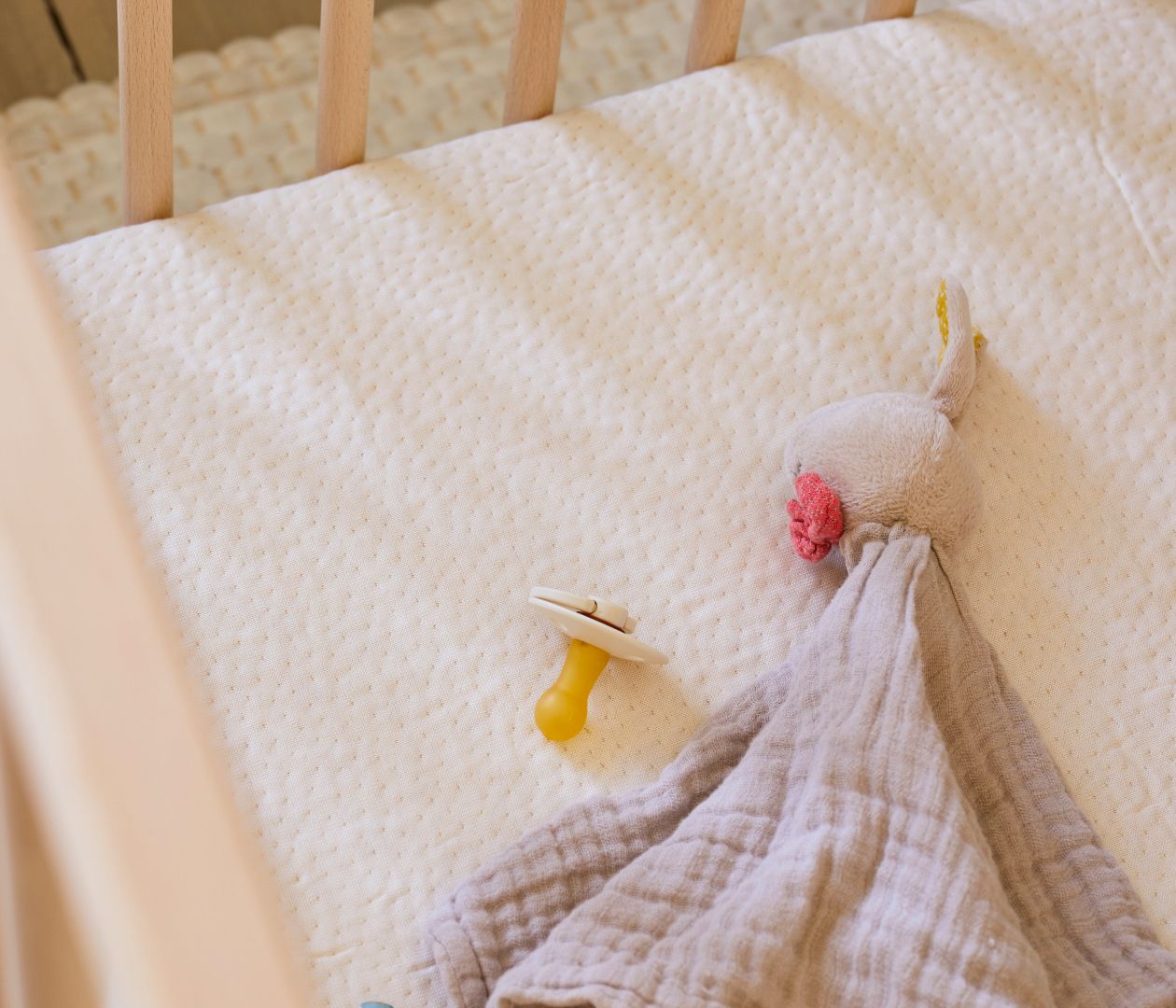
Are you expecting a baby and starting to prepare a cozy little nest to welcome them into the world? If so, you may have already noticed that there are different types of cribs available.
To choose the best possible bed for your child, there are a few questions you’ll need to ask yourself. Among them, you’ll likely find yourself wondering: what size mattress should you choose?
In fact, in addition to the various models of cribs, there are also several mattress sizes available for babies. 60x120 cm or 70x140 cm: which mattress size is best for a baby?
We invite you to keep reading to find out more and discover all our tips on size, as well as the type of bed and mattress that will ensure your baby sleeps comfortably and safely.
What kind of crib should you choose for a newborn?
Before considering the ideal mattress size for your child, you must first choose the type of bed for your baby. The type of bed will determine which mattress is best suited for your child.
Key factors for making the right choice
Crib, bassinet, or cot: which type of bed is best for your baby? Each option has its pros and cons. The choice of baby bed depends on factors such as:
- the comfort it provides for the baby;
- the safety provided for the baby;
- the length of time the bed can be used before it needs to be replaced with a more suitable one.
Cribs and bassinets: from birth to 6 months
During your baby’s first six months, you may want to choose a crib that’s designed for an infant’s small size and reminds them of the time spent in their mother’s womb. This helps your baby feel more secure. You can also buy a crib on wheels to make it easier to move your child from one room to another without having to carry them.
A bassinet is also a sleeping option for your baby’s first six months. It differs from a crib in that it isn’t attached to a frame. Often made of wicker, a bassinet is lightweight and therefore easy to move around. Just like a crib, its small size will help your baby feel secure.
The crib: from birth to age 3
However, your baby will grow very quickly, and the bassinet or crib will no longer be suitable. Once your child is able to sit up on their own—around six months of age—the crib and bassinet will become too dangerous, as your baby could fall out.
Once your child turns 6 months old, they will need a crib with rails to prevent falls. It is perfectly fine to put your baby in a crib right from birth. This saves you from having to make multiple purchases: first a bassinet, then a crib.
A crib is ideal for supporting babies as they grow until they are 2 or 3 years old. Once your child is able to climb into their crib on their own, it’s time to consider switching to a “big kid” bed, which is usually a standard-size single bed (90x190 cm). If you’d like to invest in a bed that will last your child the longest as they grow, there are also convertible cribs available. Thanks to removable bars and an adjustable mattress, your child can keep this bed until they’re 6–8 years old.
The size of a baby mattress: safety first
As you can see, one of the most important factors to consider when choosing a mattress size for a baby is safety.
It is therefore important to choose a mattress that is the right size so your baby can sleep and move around safely. A mattress that is too small can be particularly dangerous, as the child could slip and get stuck between the bars and the mattress.
The standard dimensions for a baby mattress are 60 cm wide by 120 cm long or 70 cm wide by 140 cm long. For a crib, the mattress measures 33 cm wide by 72 cm long.
Finally, the baby mattress must comply with the EN 597-1 fire safety standard.

Different sizes of baby mattresses
Just as children’s beds come in different sizes (standard 90x190 cm, as well as 90x200 cm or 100x200 cm), baby mattresses are also available in various sizes.
The 60x120 mattress: a size designed for cribs
A crib is an essential purchase to ensure your baby sleeps safely. The most common mattress size for this type of crib is 60 x 120 cm.
This size is ideal for your baby's comfort until they are about three years old. They will have plenty of room to move around and grow. This mattress size can be used from the moment your child is born.
The 70x140 mattress to support your child's growth
Baby mattresses are also available in the 70 x 140 cm size. They are often designed for convertible and adjustable beds to accommodate a child’s growth until they are 6–8 years old.
This type of mattress is ideal for transitioning from a crib (60x120) to a toddler bed (90x190). However, it is perfectly fine to use a 70x140 mattress from the moment the child is born.
Mattresses for newborns
The dimensions of crib mattresses typically range from 40 cm in width to 80 cm in length (most commonly 33 x 72 cm).
You may choose this mattress size to provide a more snug sleeping space for your infant, so they feel as safe and secure as they did in their mother’s womb. However, this mattress can only be used for a few months.
What kind of baby mattress should you choose?
In addition to the mattress dimensions, it’s also important to consider the type of mattress. When choosing a mattress that’s safe for babies, it’s essential to pay attention to the materials it’s made of. With more and more children suffering from allergies, it makes sense to opt for a mattress made from natural materials.
In particular, we recommend choosing a natural latex mattress. Latex has thermoregulatory properties and helps prevent allergies by inhibiting bacterial growth. A latex mattress also provides good support while remaining flexible. Other natural materials such as wool, coconut fiber, or Tencel are also suitable for baby mattresses.
When it comes to mattress thickness, we recommend choosing a model that is between 12 and 15 cm thick. As for density (not to be confused with thickness), you should choose a mattress that is neither too firm nor too soft. The ideal density for a crib mattress is between 20 kg/m³ and 22 kg/m³.
We recommend these other pages: