

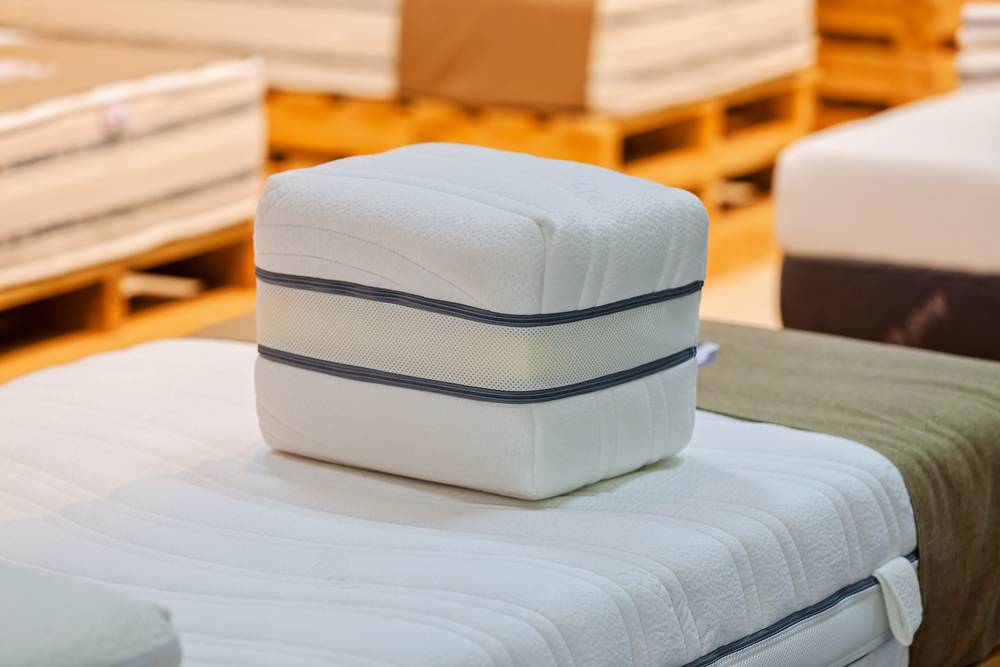
When it comes to buying a new mattress, whether for an adult or a child, the internet is full of all kinds of advice and tips. However, when it comes to baby bed supplies, things can quickly get complicated. In this regard,buying a mattressisundoubtedly one of the first priorities, even though, beyond price considerations, choosing the right product must be based on strict criteria. Among the issues that frequently arise, thethickness of thebaby mattresscausesa fair amount of confusion, particularly because all sorts of advice are heard here and there, which isn’t always worth following.
So, what thickness should a foam or latex mattress be? Should it be 10 or 15 cm? To help you take your baby’s sleep needs into account, here’s a rundown of tips for choosing the right mattress thickness.
The Importance of a Mattress for a Baby
As we saw in the introduction, buying ababy mattressisan essential step for new parents. However, they are not necessarily aware of how important it is to choose the right product, especially when it comes to thickness, since the mattress must provide optimal support for the infant.
Neither too soft nor too firm,a baby mattressisall the more important given that a newborn can spendup to 18 hours a day in it. Similarly, after the age of one, a toddler needs 15 hours ofsleep each day. As you can see, a baby’s bed is of paramount importance for their rest, but alsofor their growth, which is why it’s essential to choose it with great care.
With that in mind, it’s important to understand, for example, that the mattress thickness should be suited to the bed frame, as well as to your little one’s potential movements. Traditionally, it’s best to choose a mattress that isn’t too thick.
Choose the right thickness for a baby mattress based on the crib
To ensure a comfortable night’s sleep, a baby needs all the necessary support while in bed, starting with their back. In fact, whether it’s their spine, neck, or lower back,the bone and muscle issuestheymay develop due to a poor-quality mattress can have disastrous consequences for their growth. To choose the right model—and therefore the right thickness—you need to consider the different options available. Are you lookingfor amattress for a crib? Do you want to buy amattress for a baby bed? Or are you looking for a mattress for your newborn’s playpen? We’ll help you figure out which mattress to choose for each of these scenarios.

The thickness of a mattress for a baby crib
If you’re shopping for a mattress for your baby’s crib or bassinet, your criteria are obviously different from those for a bed intended for an older toddler. To ensure maximum comfort for newborns during their first few weeks of life, athickness of 6 to 8 cmisgenerally considered ideal. Although this may seem insufficient, keep in mind that a baby is very light during this stage of life. There is therefore no need to buy a mattress that is too thick or too firm.
The thickness of a mattress for a baby's bed
After the crib stage comes the time for a big bed, even if your baby is still an infant. Now more than ever, your baby’s needs are changing and require quality back support. Therefore, you should increase the mattress thickness and choose one that isbetween 8 and 15 cm thick. Be careful, however, as this measurement can vary significantly from one model to another depending on the materials used to make the mattress. Starting at one year of age, it is also essential to consider the mattress density, a measurement expressed inkg/m³onproduct pages. This figure indicates the mattress’s firmness and its ability to support your baby throughout the night. The lower the density, the poorer the support.
When choosing a crib mattress, it is recommended to selectone with a density of at least 30kg/m³ to ensure it will last for years to come. In any case, be sure to avoid foam mattresses with a density lower than 25kg/m³, as they will sag very quickly.
The thickness of a mattress for a baby playpen
If you're looking for a mattress for your baby's playpen, it's important to consider criteria other than those that apply to a crib. After all, the goal here isn’t to support the child while they sleep, but rather while they play. So, not only must the mattress provide the necessary comfort, but it must also allow the child to move around easily. This means limiting the height of the mattress and choosing only models that arebetween 4 and 5 cm thick.
Keep in mind, however, that a playpen mattress must be fairly dense, especially since your child is likely to stand on it. For this reason, a density of at least35kg/m³isrequired for added safety.
Choose the thickness of a baby mattress based on its composition
Although there are generally accepted guidelines regarding the thickness ofbaby mattresses, it’s important to understand that a number of factors can influence this. Among these arethe mattress’s composition and the materials used, which play a direct role given their significant differences. It is therefore important to distinguish between synthetic and natural materials, because while the support provided by the former is excellent for your baby’s growth, that of the latter is not naturally optimal and requires your full attention as parents.
Therefore, the minimum thickness required foryour baby's mattresscanbe specified as follows:
- at least 12 cm for a mattress made of synthetic materials (polyurethane foam, memory foam, synthetic latex, etc.);
- between 7 and 10 cm for a mattress made of natural materials (100% natural latex, coconut fibers, etc.).
As you can see,natural-fiber mattressesrequiremuch less padding, since they provide better support for your baby. Therefore, when it comes to synthetic materials, you need to be careful.
Please note that, for your baby’s safety, the mattress should never be thicker than 15 cm, as this could raise the baby too high in the crib and increase the risk of an accident. Also, don’t pay attention to the common misconception that greater thickness is a sign of quality. In fact, only density can provide this information, since there are thin mattresses with high density, and vice versa. The issue of thickness is primarily a matter of support and safety.
We recommend these other pages: